
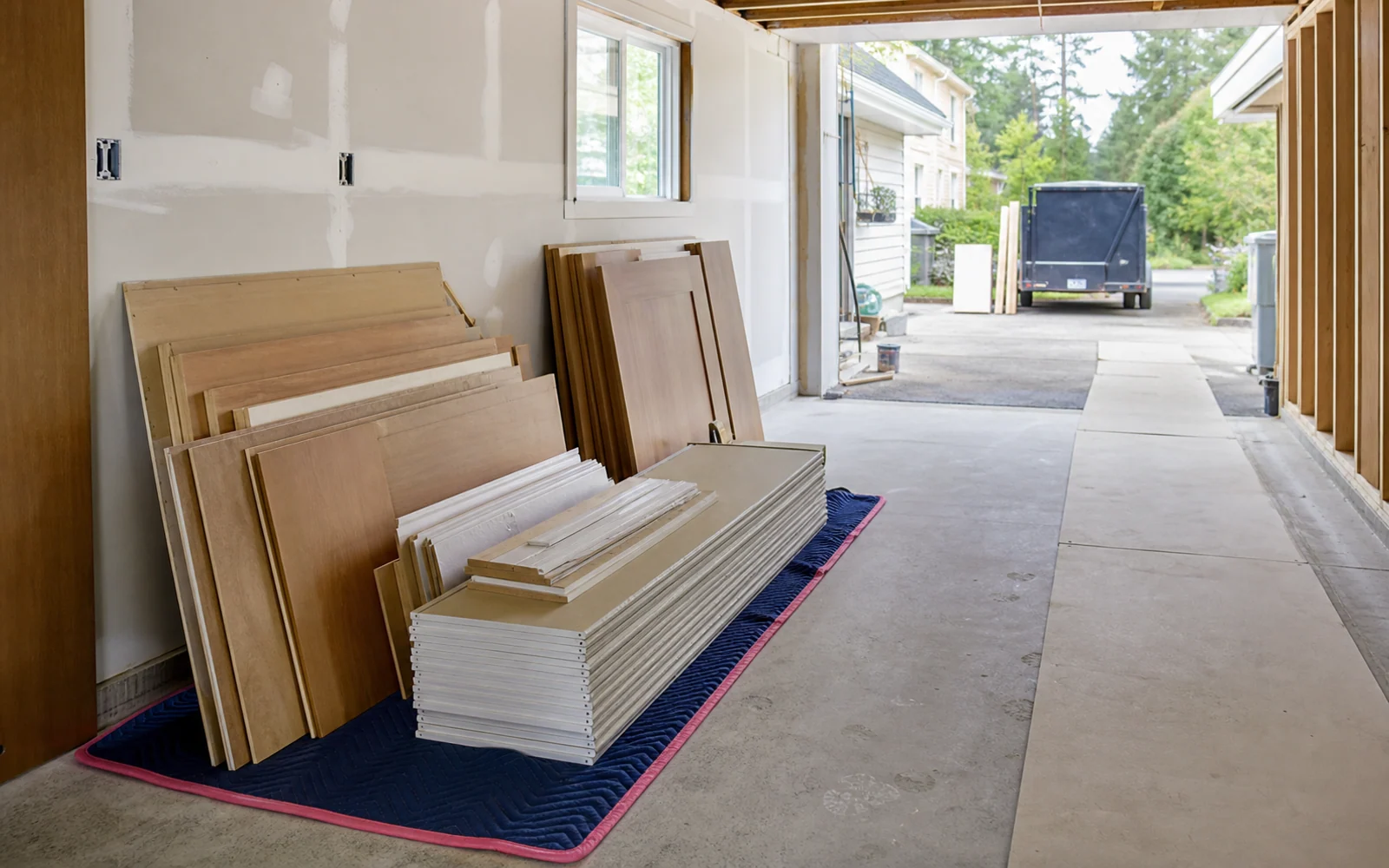
- Cabinet and millwork pieces
- Wood and trim
- Fixtures
- Clean project packaging
- Heavy aggregate or masonry
- Large or dense quantities

Contractors
You Do the Work. We Handle What It Leaves Behind.
Keep work areas clear between phases with project-debris pickups. Save one hauling contact for a single cleanup or recurring visits, and tell us what materials and timing your crew needs.
Save the number once. Send a photo and a pickup window every time after that.
Material Scope
Identify the Debris Before Pickup
Project debris is easier to review when ordinary material, heavy material, and uncertain containers are identified separately.
- Paint, fuel, solvents, or chemicals
- Hazardous or regulated material
- Unknown liquids
- Unidentified containers
- Suspected asbestos material
Staging and Access
Keep the Pickup Route Out of the Next Trade’s Way
Share where the debris is staged, how the crew reaches it, and which site rules or access windows apply.
Project Timing
Match the Pickup to the Work Phase
- 01
Before the request
Photograph and identify the material types
- 02
At the staging point
Keep the reviewed debris together and the path usable
- 03
Before the next trade
Confirm timing, access, and any scope change
Material Review
Some Project Materials Need Another Path
Some material changes the hauling plan, while hazardous or regulated material requires a qualified provider.
- 01Heavy Aggregate or Masonry
Share the approximate amount and material type before booking.
- 02Hazardous Materials
These require a qualified disposal or service provider.
- 03Regulated Materials
Confirm the required handling path before service.
- 04Unidentified Containers
Keep them separate until the contents are known.
A Practical Fit
A Good Fit for Clearly Scoped Project Pickups
Contractor requests work best when the material list is specific, site rules are available, and restricted items are identified before a crew reaches the project.
- Specific project location
- Material photographs
- Defined staging point
- Site-access instructions
- Pickup window tied to the phase
Related Project Support
Match the Path to the Material


Questions
Contractors FAQs
How does Flying Flamingo support contractors and project crews?
We haul project debris in a single visit or through planned pickups as work progresses. Send the address, materials, amount, and target date so we can confirm the pickup. Completion photos and itemized invoices are available on request. Heavy or unusual debris needs confirmation; hazardous and regulated materials may require another provider.
What project debris information is needed?
Send photographs, material types, approximate amount, staging location, site access, and the requested pickup window.
Do you accept every construction material?
No. Heavy, hazardous, regulated, and restricted materials must be identified and may require another disposal path.
Can a project include more than one pickup?
Describe the phases and timing needed so the request can be reviewed against current operating capacity.
Need a Project Debris Pickup?
Send the material list, photographs, staging point, access rules, and requested pickup window.