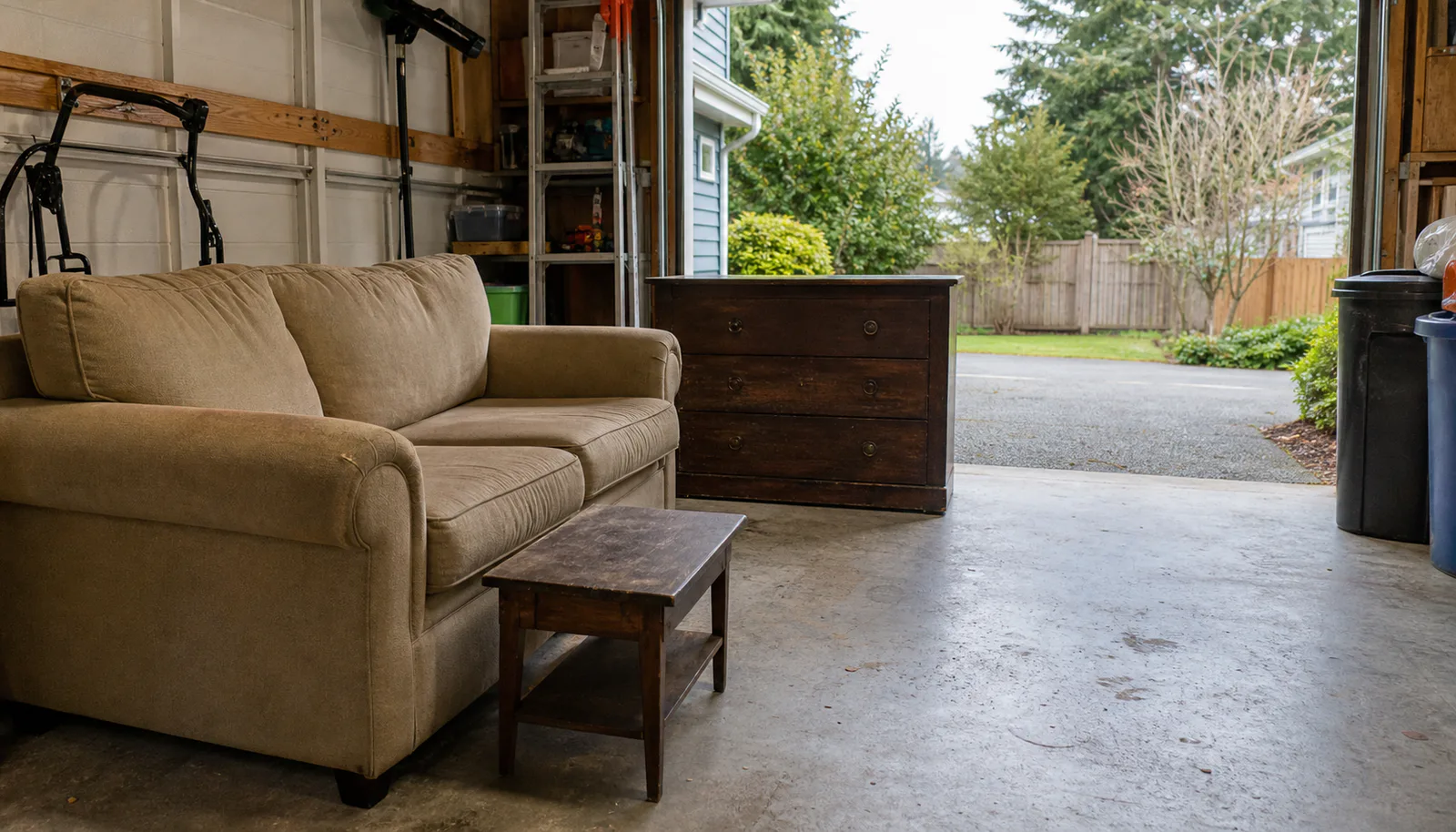
Ordinary Yard Material and Outdoor Items
Branches, trimmings, leaves, plant material, untreated lumber, ordinary fencing, small project leftovers, and typical yard furniture can be described together.
Yard Debris Removal
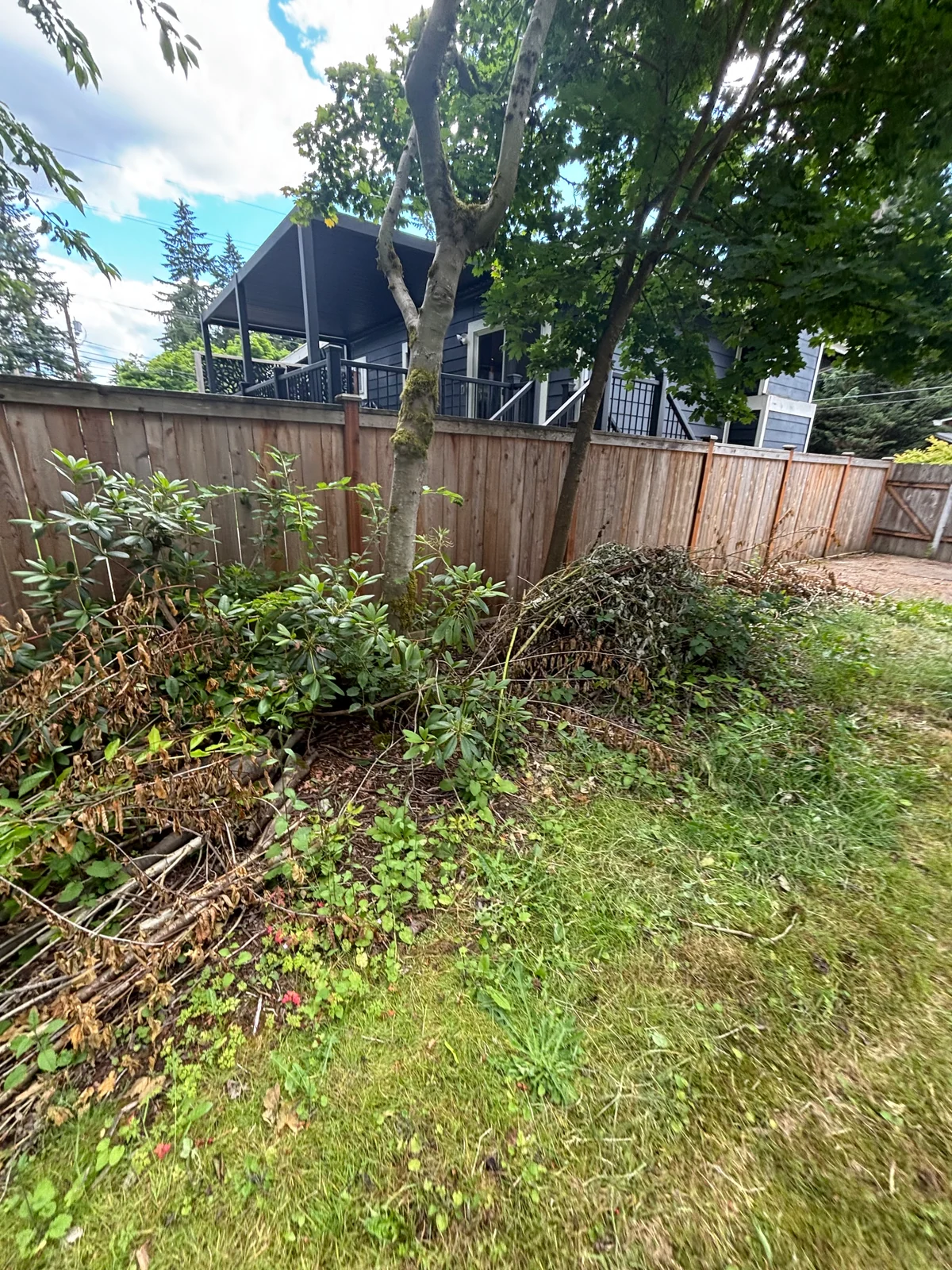
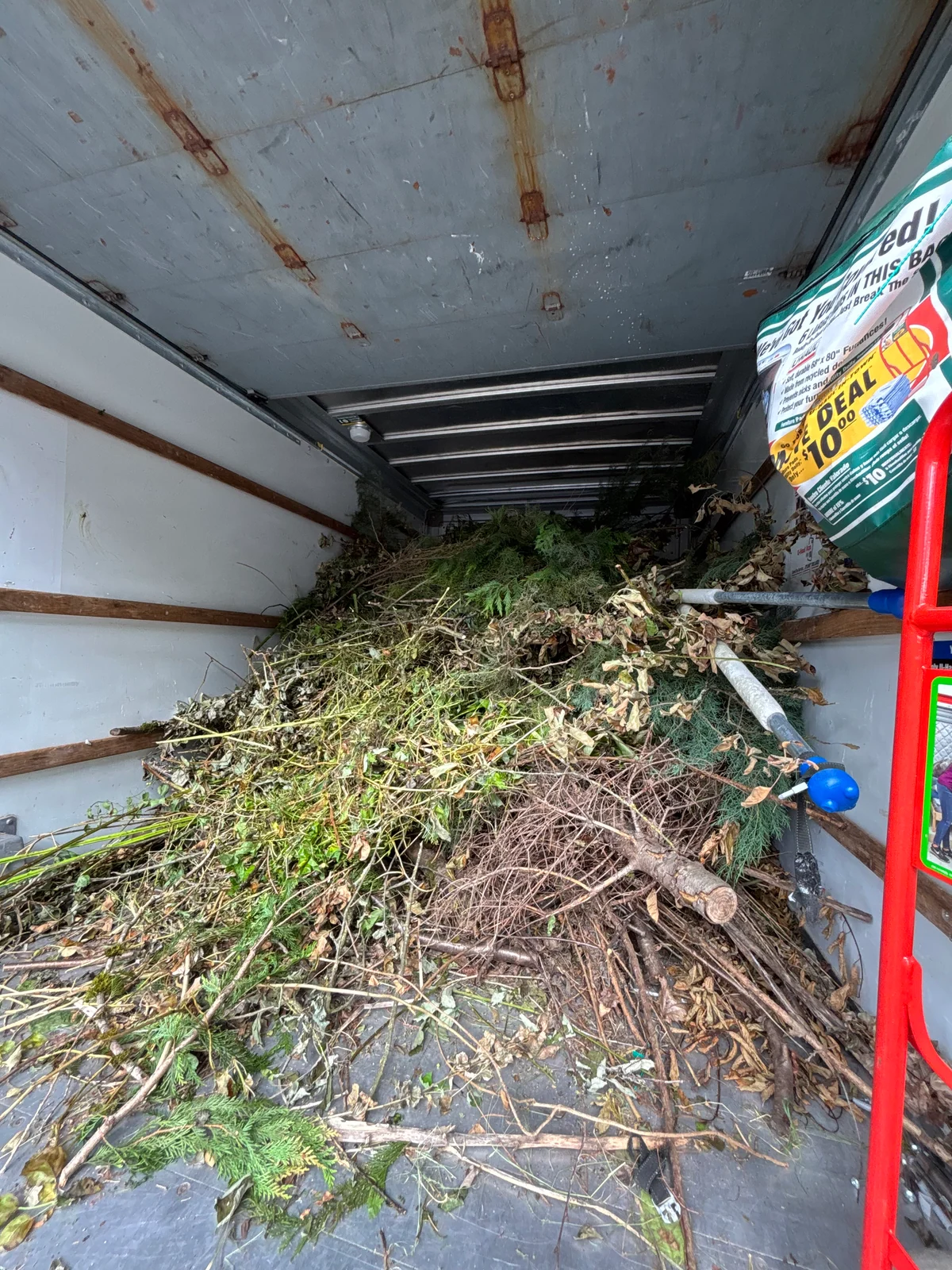
We haul branches, yard waste, and outdoor clutter. Tell us what needs to go and how to reach it, and we’ll confirm the price before loading.
Around the Yard
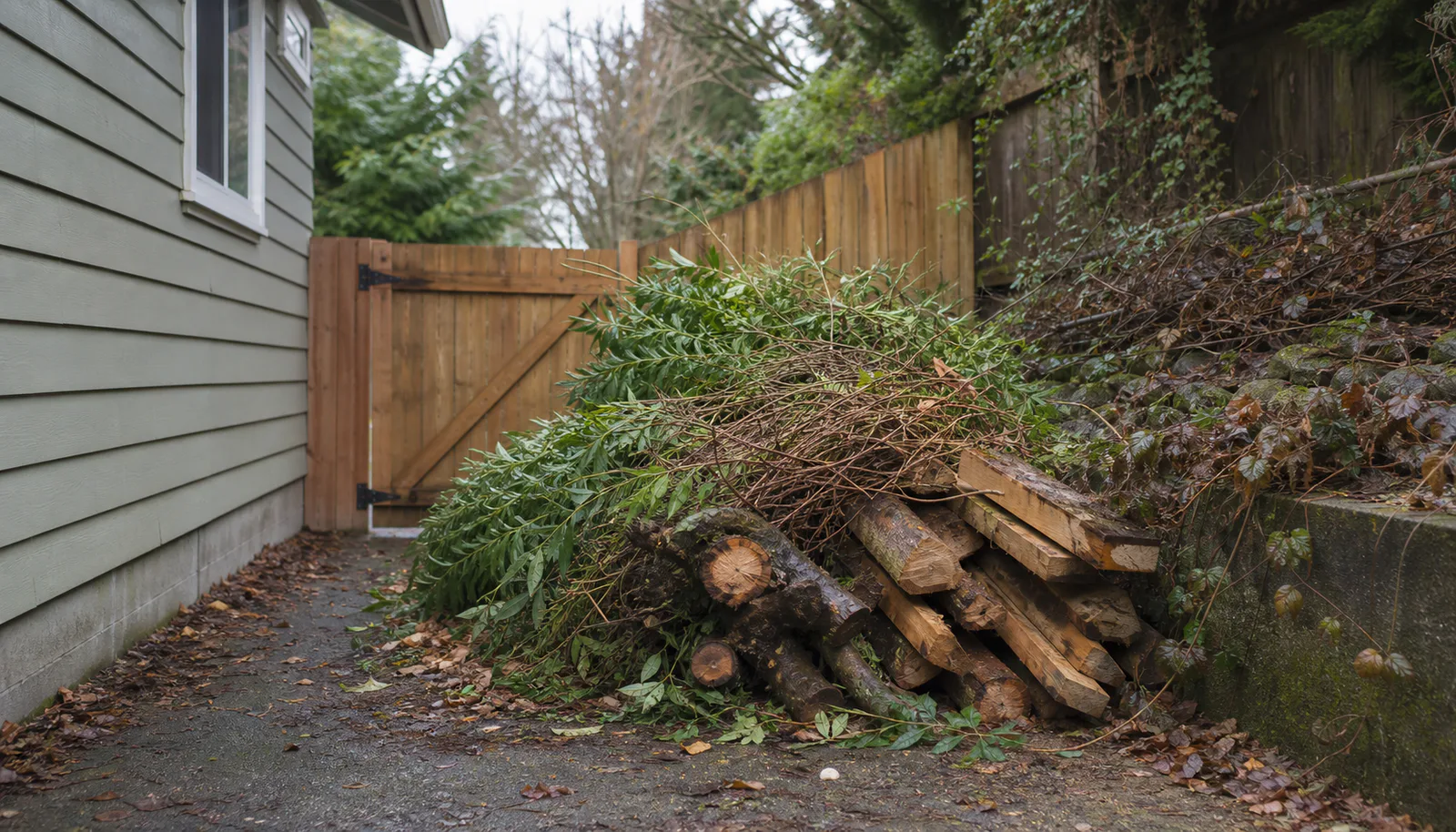
Outdoor cleanups often mix plant material, household items, and project leftovers. Tell us what is included so we can plan the pickup.
Branches, trimmings, leaves, plant material, untreated lumber, ordinary fencing, small project leftovers, and typical yard furniture can be described together.
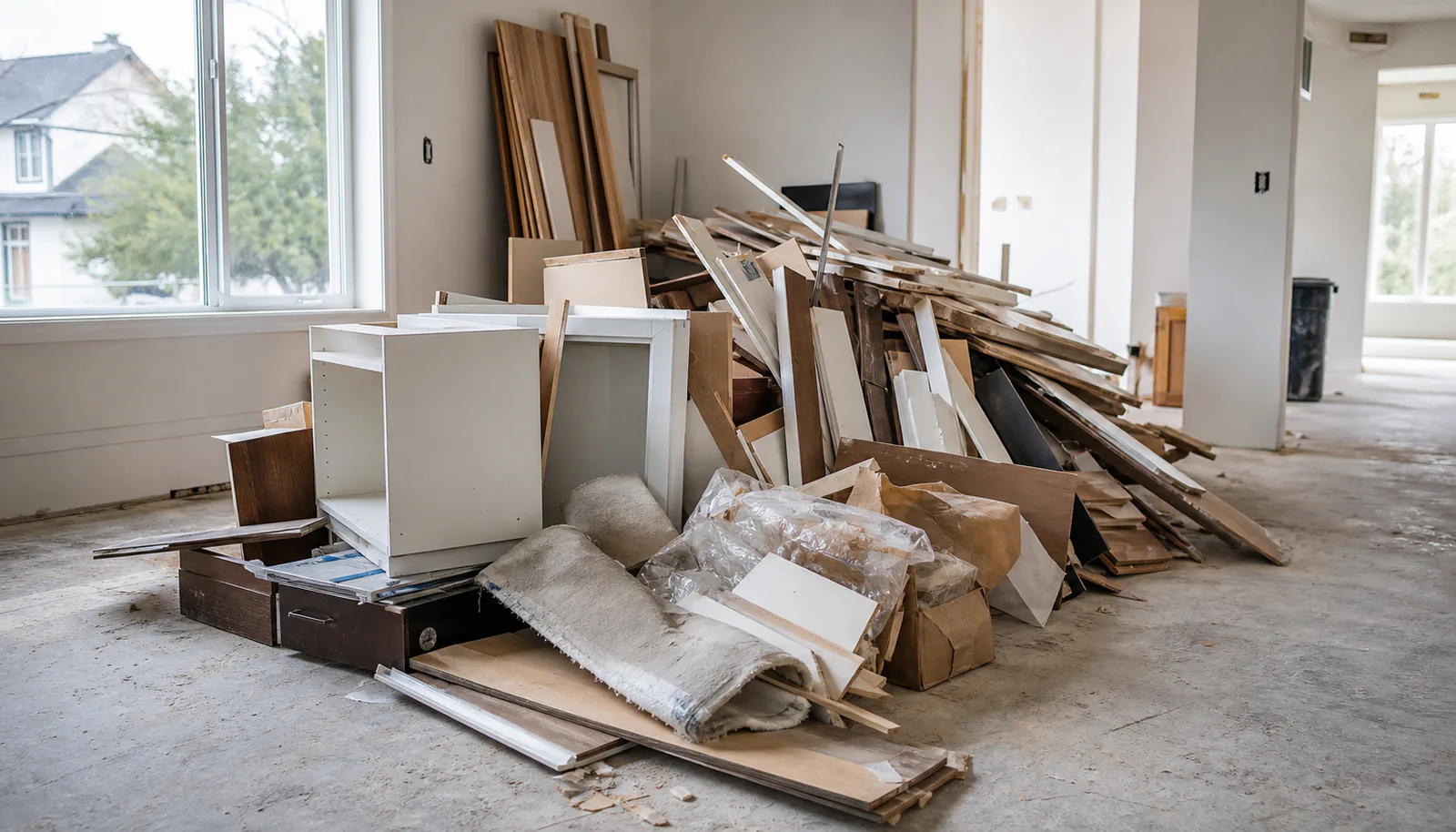
Photograph boards, panels, posts, nails, and how the material is stacked.
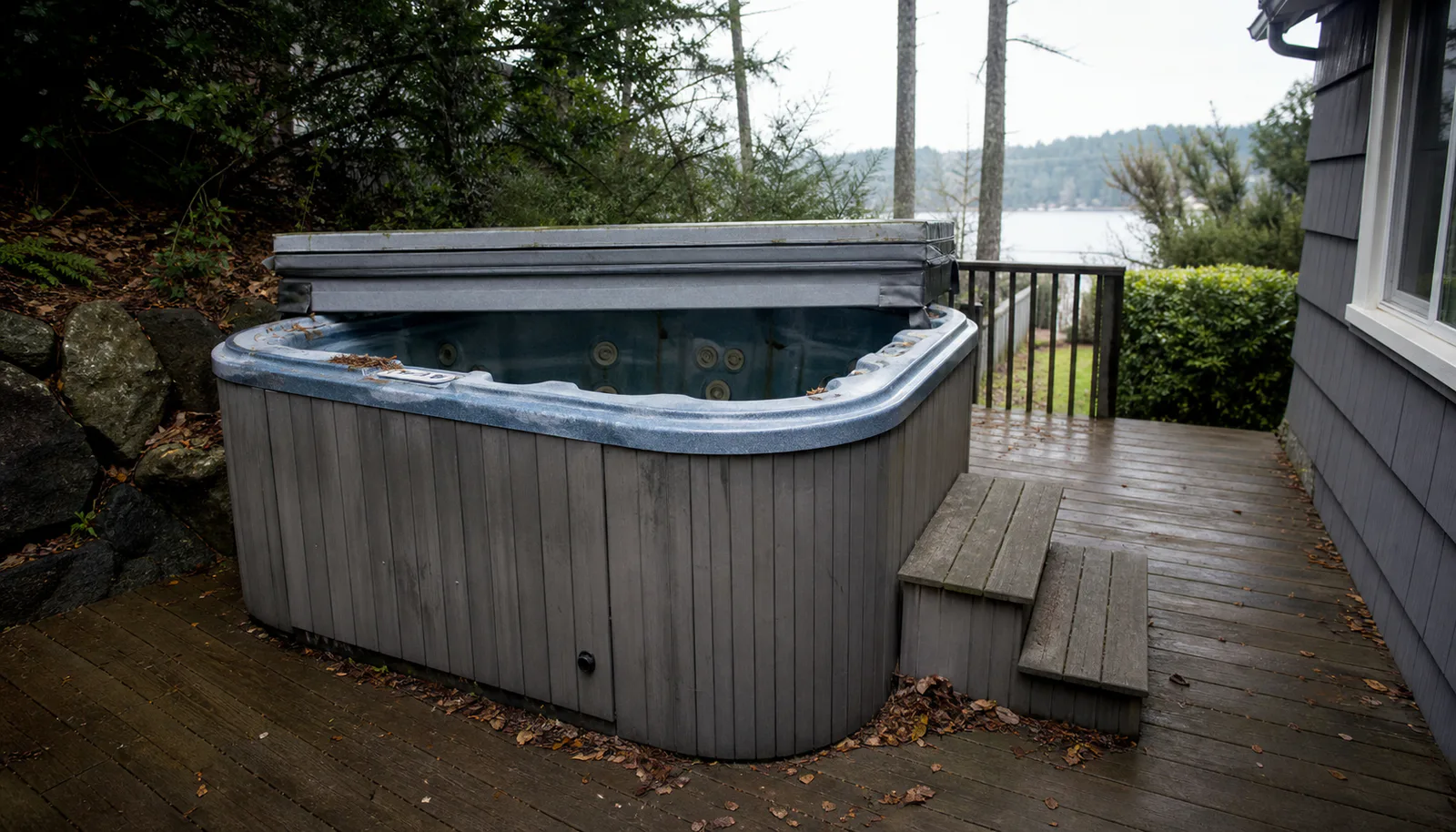
List furniture, pots, and other bulky outdoor items separately from plant material.
Soil, rock, concrete, large stumps, very heavy rounds, and significant treated-lumber quantities can change the cost or disposal plan.
Chemicals, liquids, fuel, pesticides, and unknown containers may require another handling path.
Where the Material Sits
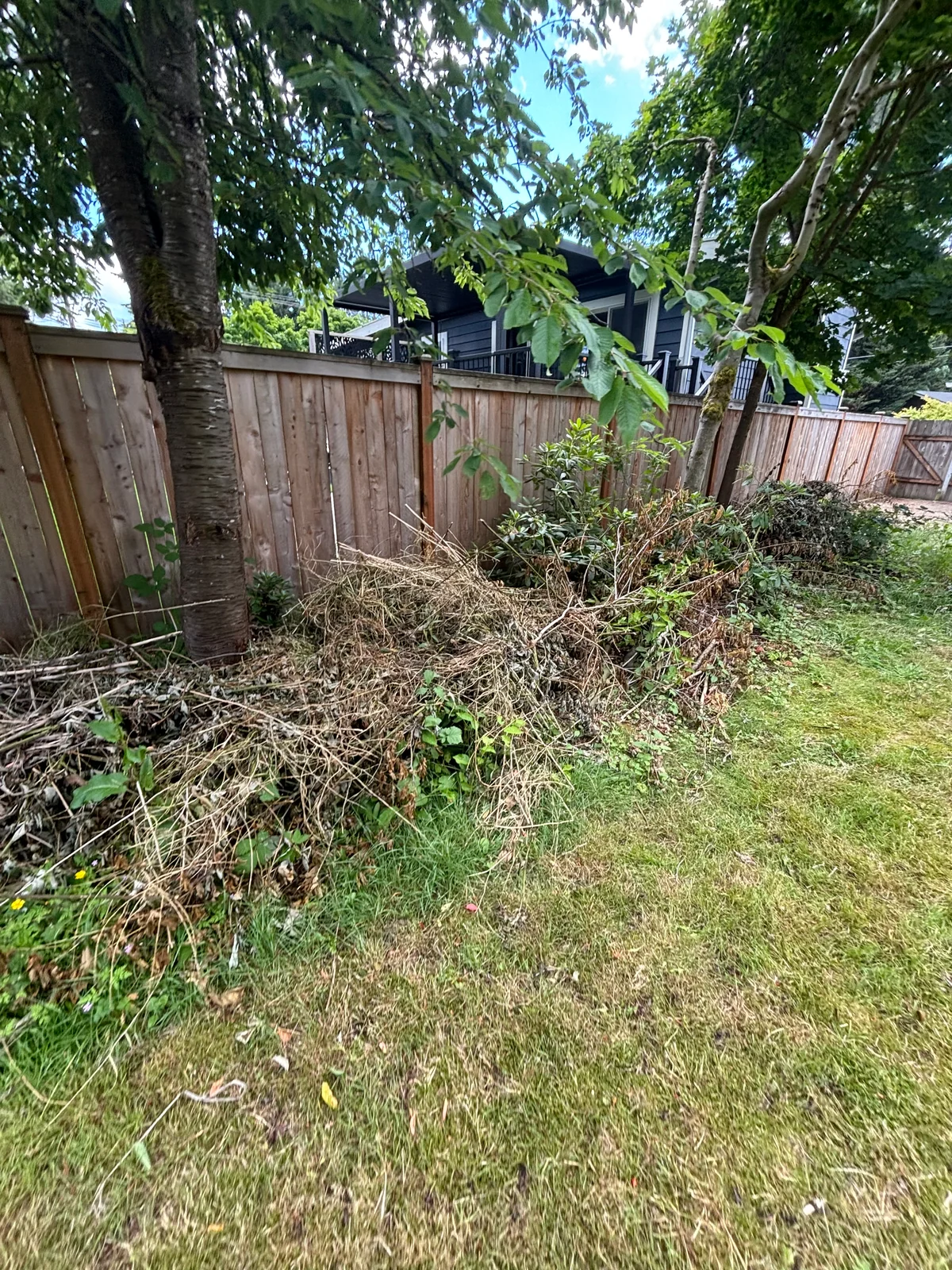
The amount can be easier to understand when every location is shown. Wide photos help connect the piles to the route out.
The Way Out
Photos of the access route help show carrying distance and any narrow or uneven areas between the debris and the loading spot.
Show the gate width, side-yard path, fences, turns, and whether material sits behind a structure.
Include elevation changes, uneven ground, or stairs along the carrying route.
Show the driveway, alley, curb, or other loading area and how far it is from the material.
Before the Pickup
Prepare only what is practical and safe. Photos are more important than perfect bundling.
No unsafe lifting, cutting, or bundling is required before you send the request.
Pile. Access. Pickup.
Choose a preferred appointment window and describe what needs to go.
Photos are optional but useful for large piles, mixed materials, gates, slopes, or unusual access.
We confirm what is being removed and the price before work begins.
See a recent Flying Flamingo yard-debris pickup in Seattle.
View Yard Debris Removal Gallery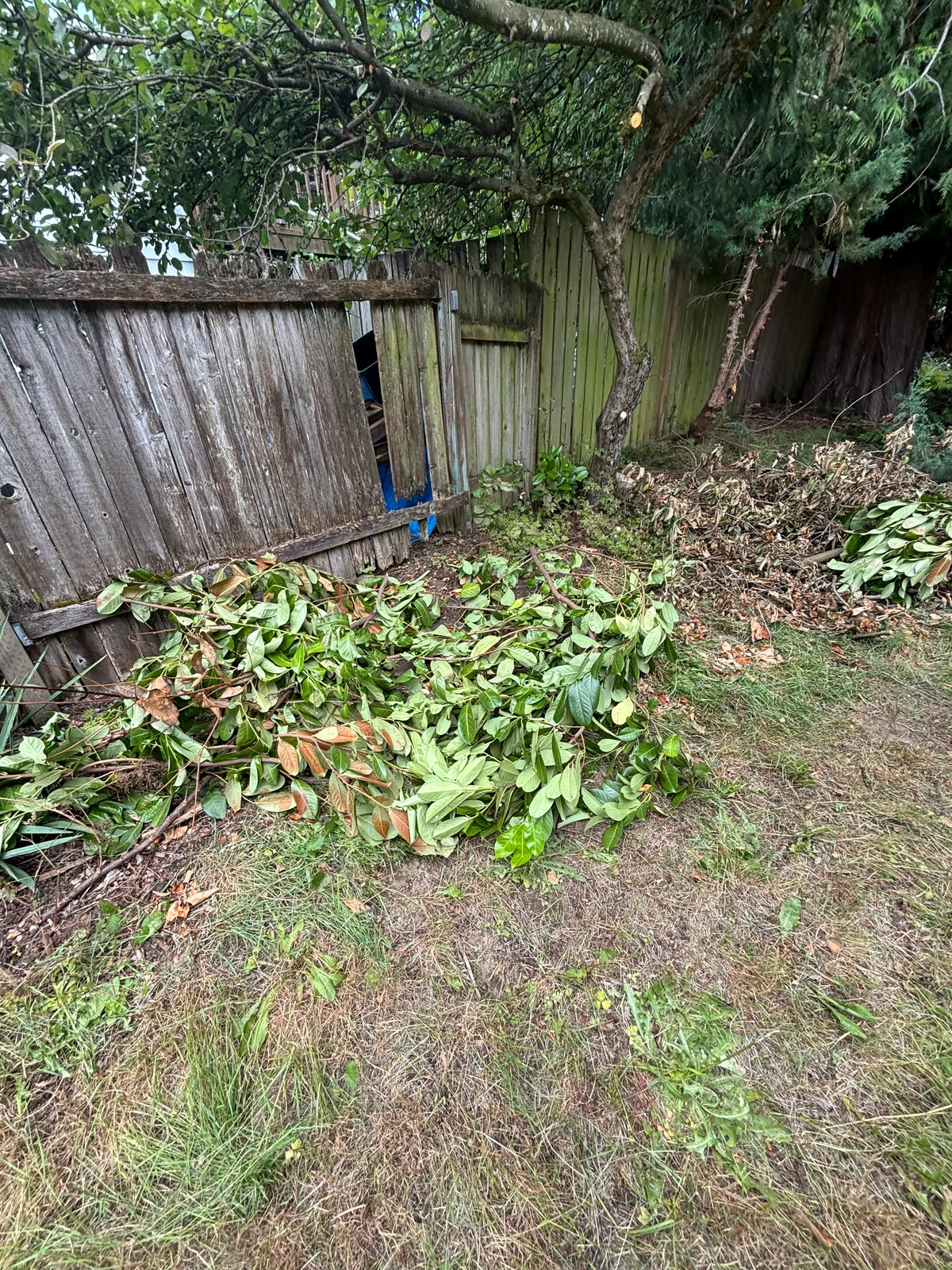
Pricing
Pricing can depend on material type, volume, weight, pile location, gates, slopes, stairs, carrying distance, sorting needs, and disposal requirements. The price is confirmed before loading begins.
See How Pricing WorksRelated Services
Choose the next service based on the material, item, or part of the property that still needs attention.
FAQ
Quick answers before you send a request.
Yes, we haul branches, trimmings, brush, ordinary yard waste, old fencing, untreated wood, outdoor furniture, and similar yard clutter. Tell us about treated wood or unusual materials so we can confirm how to handle them.
No. You don't need to bundle branches before pickup. Leave them where they are if moving them would be unsafe.
Yes. We haul old fencing, panels, and lumber. Mention treated wood and exposed nails so we can plan safe handling and the right disposal route.
Keep those materials separate and identify them before service. Do not assume soil, concrete, rock, chemicals, liquids, or unknown containers can be accepted.
Yes. We can collect debris from a gated yard with safe access. Let us know if the gate is narrow or the path has tight turns, steps, or a steep slope.
We focus on hauling away yard debris. We don't offer tree cutting, pruning, mowing, landscaping, stump grinding, excavation, or land clearing.
Show every pile, each material type, the gate and side-yard path, steps or slopes, carrying distance, and the loading area.
Flying Flamingo Junk Removal
Send photos of the pile, what is mixed in, and the route from the yard to the loading area.